How render fails
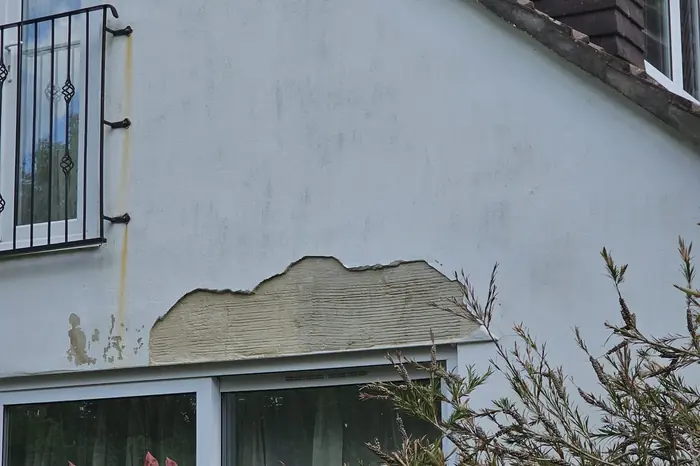
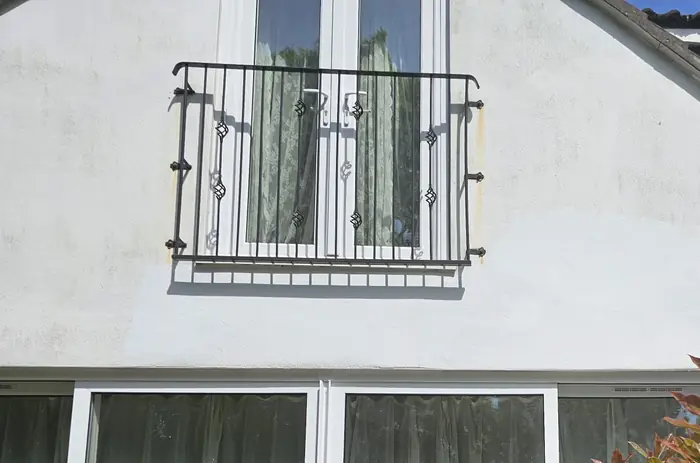
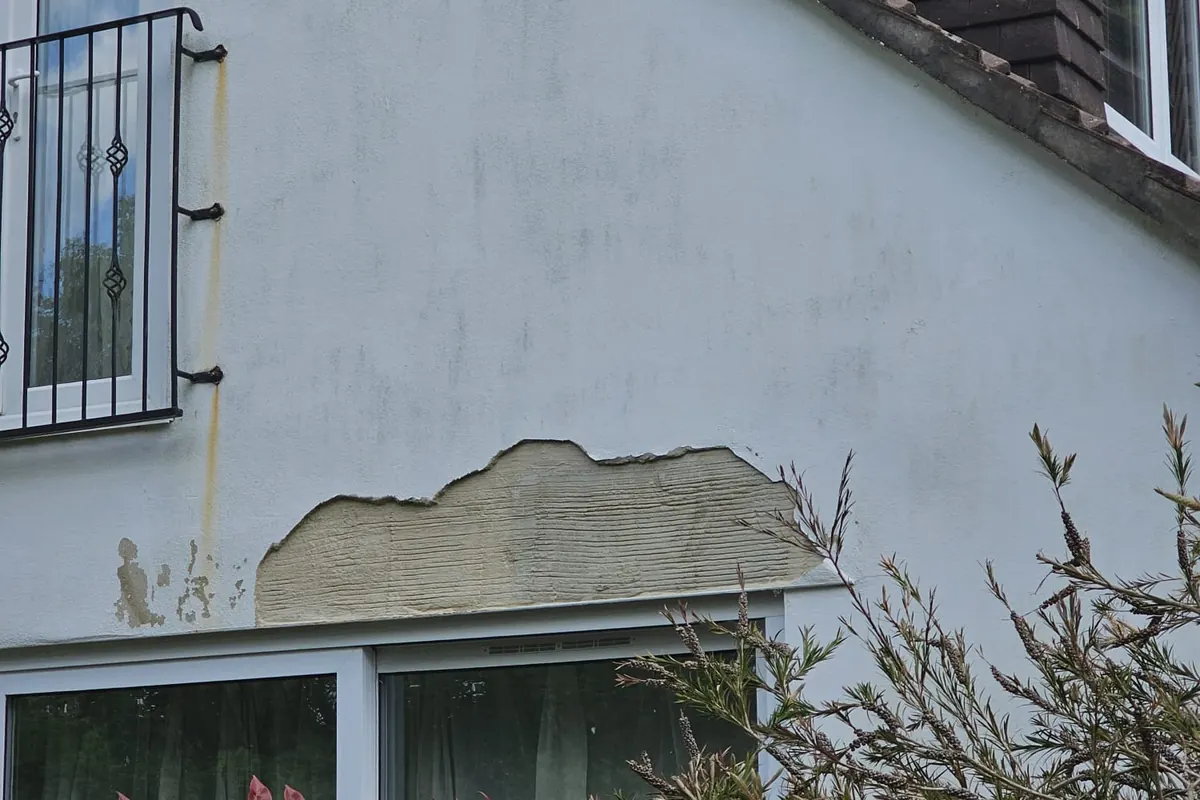
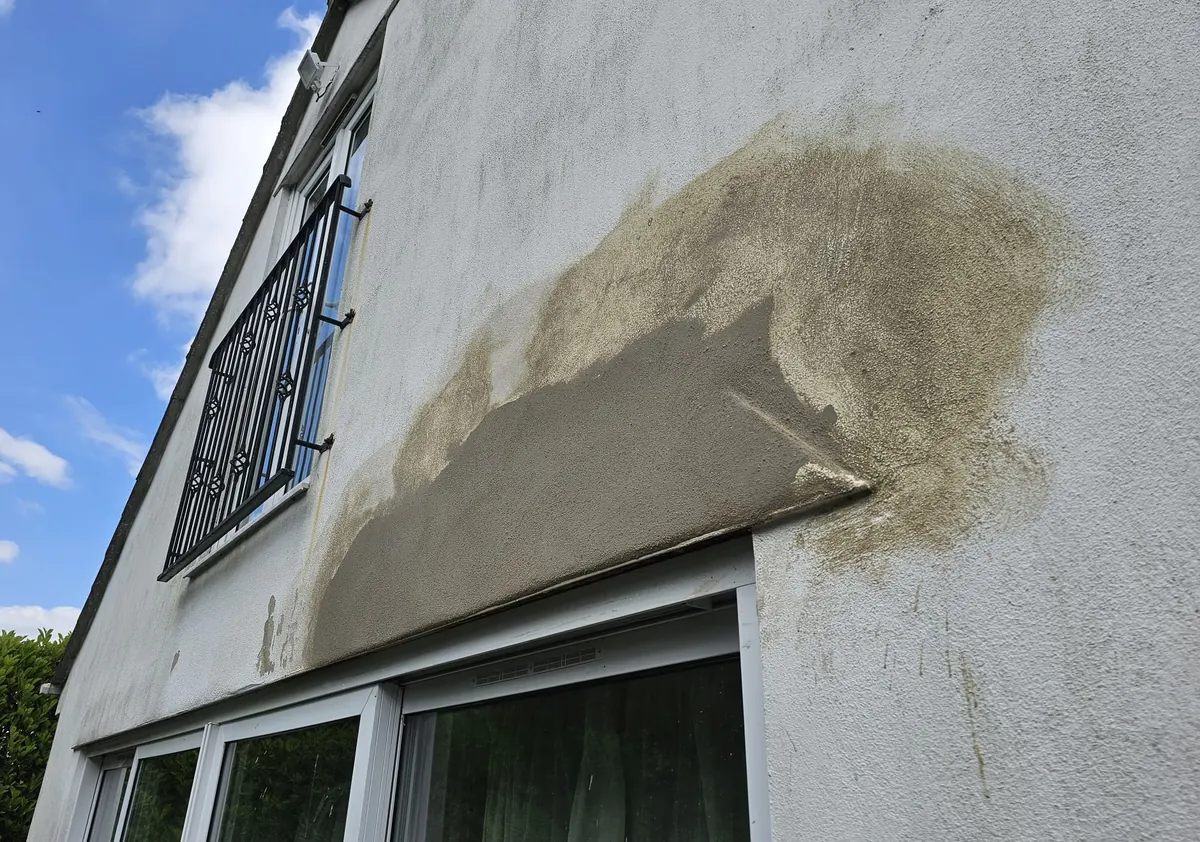
Render usually lets go long before you can see it. Water gets behind it — through a cracked sill, a failed gutter joint, a gap at the verge — and the bond between the render and the masonry breaks down. The surface stays put for a while, held on by paint and habit, and then one winter a patch comes off in a sheet.
The tell before that happens is sound, not sight. Tapped with a knuckle, sound render is dull and solid; blown render rings hollow. We check the whole elevation that way, because the patch you can see is almost never the full extent of it.
What the repair involves
- Hollow areas cut back until the render sounds solid all round the edge
- The cause dealt with first, or you will be doing it again — gutters, sills, a cracked verge
- Scratch coat and top coat built up to the same thickness as the original
- Floated to match the existing texture, which is the part that decides whether the repair shows
- Left to cure properly, then the whole elevation painted so there is no patch of fresh colour
The last two points are where most repairs fail. A patch that is flat but smoother than the wall around it, or painted only where the new render went on, is visible from the pavement for the rest of the building's life.
Painting the whole elevation
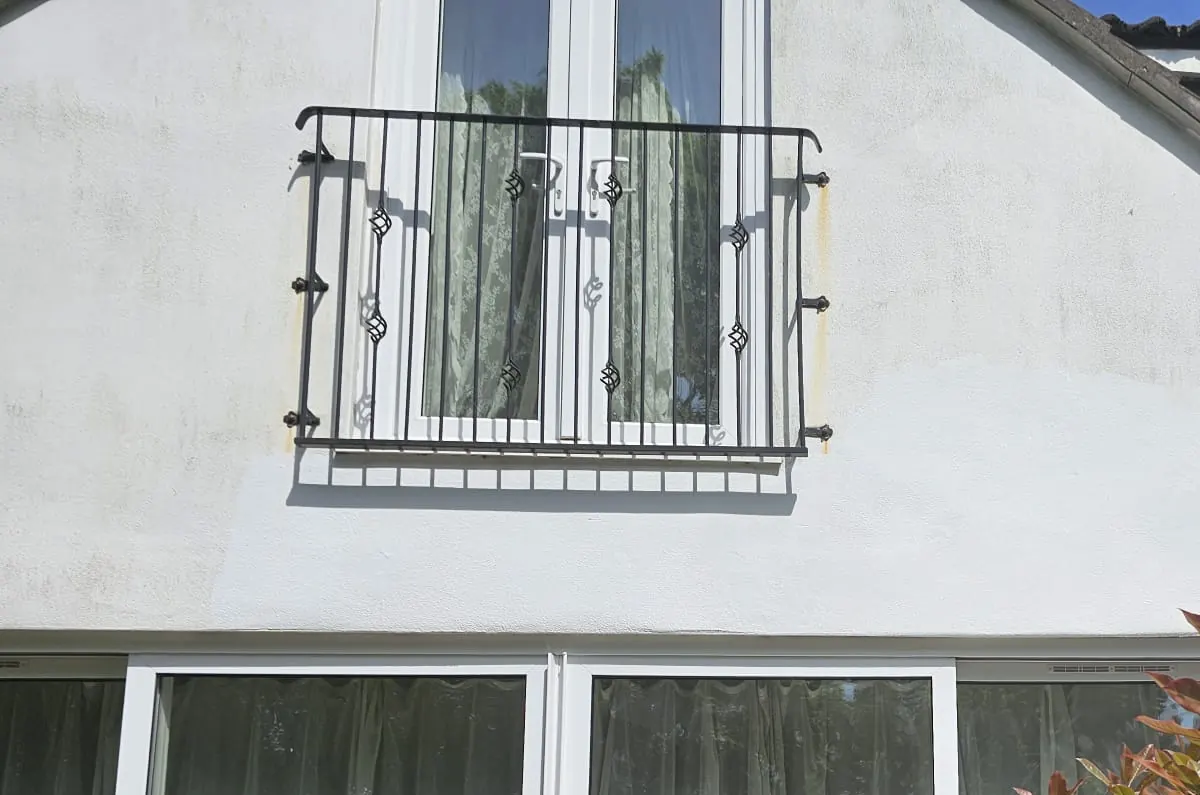
We would rather paint the full wall than the repaired area. It costs more on the day and it is the only way the job disappears. Masonry paint on a cured, correctly matched surface will hold for years; on green render it will not.
What it costs
Starting figures, fixed in writing after a free visit. Materials at trade rates, listed at cost. Full price list.
Questions we get asked about this
How do I know if my render has blown?
Tap it with a knuckle. Sound render is dull and solid; blown render rings hollow. Bulges, hairline cracking in a map pattern and staining below a sill are all worth a look.
Will the repair be visible?
Not if it is floated to match the existing texture and the whole elevation is repainted afterwards. A patch that is flatter or smoother than the wall around it will always show, whatever colour goes over it.
Do you need scaffolding?
It depends on the height and the size of the area. A tower is enough for most domestic gable repairs. If scaffolding is needed it goes in the quote before we start, not afterwards.
What time of year can rendering be done?
Spring to autumn is straightforward. Render should not be applied in frost or in the height of a heatwave, and it needs dry weather to cure, so winter work depends on the forecast.
How long before it can be painted?
Typically three to four weeks for the render to cure, longer in cold or damp conditions. Painting too early traps moisture and the paint fails.